Unsold condos in Bangkok: where the stock is, how fast it sells
Unsold condos in Bangkok: in Sukhumvit, sales rose by 138.6% in a year, and the REIC says the stock there would clear in 16 months. Elsewhere, the pace differs.
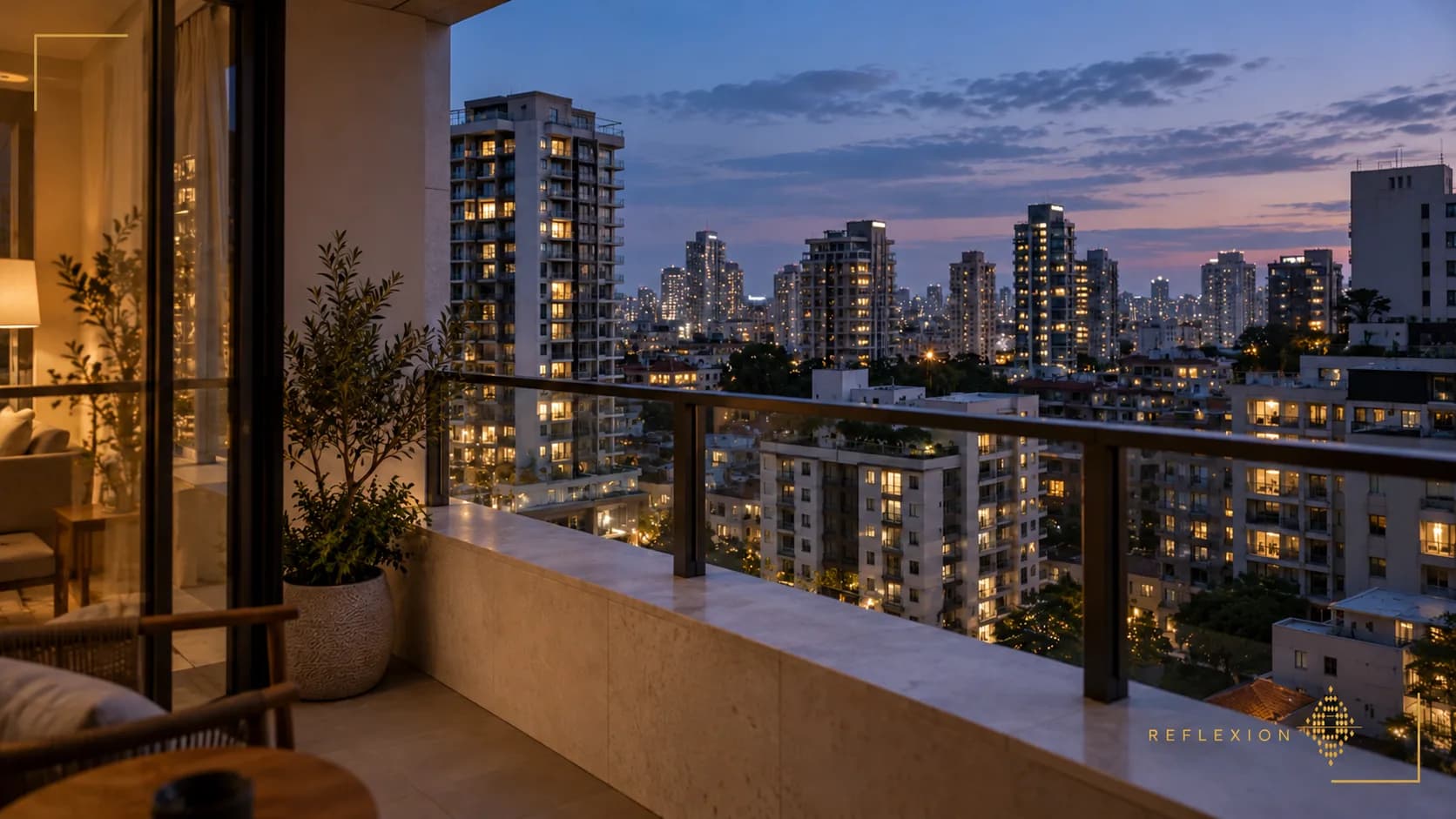
The movement is not confined to Sukhumvit: across Greater Bangkok, sales of new condominiums rose by 19.5% in the second quarter of 2026, according to the Real Estate Information Center (REIC) survey published on 22 September. That same summer, another figure did the rounds of the newsrooms: 350,000 unsold condominiums, announced on 12 June by Knight Frank for Bangkok and its neighbouring provinces. On 15 October, Cushman & Wakefield counted 65,300 for Bangkok alone. The two figures do not cover the same territory and, according to the sources that break it down, the stock is concentrated in the mass market and on the outskirts, far from the central addresses described in our guide to Bangkok’s neighbourhoods. Here is what the series count, where the unsold units are, how they built up and what the public measures cover.
Why can’t 350,000 and 65,300 be compared like for like?
Because they do not cover the same territory, and the documents consulted give no detailed definition that would allow them to be reconciled. Knight Frank Thailand’s report on the first quarter of 2026 refers to unsold inventory of ‘around 350,000 units’, which would take five to six years to clear without substantial new supply. The report itself does not define its scope; it was the firm’s spokesperson, Pojaman Worakitpokatorn, who clarified it on 12 June in Krungthep Turakij and The Nation: Bangkok and its surroundings. The same report sets this stock against about 60,000 condominium transfers a year, which does indeed give the five to six years announced. What these 350,000 units include, older developments, projects under construction or resale units, is not specified in the documents consulted.
Cushman & Wakefield publishes a narrower measure. Its Thailand Real Estate Outlook for the third quarter of 2026 counts ‘more than 65,300 unsold units’ in Bangkok, worth about THB 370 billion (£8.3 billion), of which 25,700 are completed and ready for transfer, or about 40%. Its head of research, Surachet Kongcheep, speaks in the Thai press of ‘accumulated’ stock in developments. Colliers provides another order of magnitude for Bangkok’s stock. The REIC also publishes total regional supply, which is a separate indicator. Resale listings measure something else again.
Five measures of condominium supply, with different scopes and dates:
| Author and date | Units | Scope | What is counted | Clearance time cited |
|---|---|---|---|---|
| Knight Frank, June 2026 | 350,000 | Bangkok and surroundings | ‘unsold inventory’, with no written definition | 5 to 6 years without substantial new supply |
| Cushman & Wakefield, October 2026 | 65,300 | Bangkok | accumulated unsold stock in developments, 25,700 of them completed | 2 to 3 years without launches, according to The Nation |
| Colliers, Q1 2026 | ≈ 67,600 | Bangkok | cumulative inventory minus units sold | 6 to 7 years if new supply stays below 15,000 units a year |
| REIC, Q2 2026 | 85,249 | Bangkok and 5 provinces | total condominium supply (Total Supply), distinct from remaining stock | about 39 months for the remaining stock |
| REIC, Q4 2025 | 70,611 | whole country | condominium resale listings | not applicable |
Knight Frank’s figure is markedly higher than the other series shown. Differences in subject, territory and date make it impossible to measure the gap between them here on a like-for-like basis. To place the market as a whole, the REIC records 202,414 homes still for sale, of all types, houses included, in Bangkok and its five neighbouring provinces in the second quarter of 2026. Clearance times follow the same logic: each divides a different stock by a different pace, hence durations ranging from two to seven years.
Where is Bangkok’s condominium stock?
In the mass market, first of all. According to Cushman & Wakefield, about 55% of Bangkok’s unsold units are offered below THB 3 million (£67,400) or at no more than THB 100,000 per square metre (£2,200); adding the band from THB 100,001 to 150,000 per square metre (up to £3,400) takes the share to about 76%. Dr Sopon Pornchokchai, of the Agency for Real Estate Affairs (AREA), was already placing the bulk of unsold homes, all types combined, in the market at THB 3 million or less and on the outskirts back in January.
On the outskirts next, but not everywhere. The REIC measures condominium absorption by area in the second quarter of 2026: 5.2% of stock sold each month in Sukhumvit, or about 16 months; 3.3% in the Bang Yai–Bang Bua Thong–Bang Kruai–Sai Noi area, in Nonthaburi, about 27 months; 2.8% in the Mueang Samut Prakan–Phra Pradaeng–Phra Samut Chedi area, about 32 months; and 0.4% in Krathum Baen–Ban Phaeo, in Samut Sakhon province, or about 252 months. The outskirts are not uniform: Khlong Luang, in Pathum Thani province, clears its stock in about ten months. Kiatnakin Phatra Bank (KKP) identifies three corridors as the most heavily stocked with mid-market homes, all types combined: Rangsit–Pathum Thani (19,300 unsold), Bang Bua Thong–Nonthaburi (18,100) and Bang Na–Samut Prakan (16,400).
Two of these three corridors are places where foreigners barely buy at all. According to AREA, foreign buyers acquired 2,015 new units in the central business district in 2025, 44.2% of sales in the area, and the city centre accounts for 55.7% of the value they bought; their purchases are close to zero in Rangsit–Pathum Thani, Chaeng Wattana or Nonthaburi–Bang Bua Thong. For the whole country and the first half of 2026, the REIC gives an average transfer to a foreigner of THB 4.3 million (£96,500) for 43.9 m², above the THB 3 million threshold used by Cushman & Wakefield. The logic of address and station that guides these purchases is set out in our article on Bangkok prices by address and station.
‘Bangkok is drowning in unsold condos.’
the highest figure, published by Knight Frank in June 2026, covers Bangkok and its neighbouring provinces, with no written definition. For Bangkok alone, Cushman & Wakefield counts 65,300 units in the third quarter of 2026, about 55% of them below THB 3 million or THB 100,000 per square metre. And according to the REIC’s survey for the second quarter of 2026, condominium absorption ranges from 16 months in Sukhumvit to 252 months in Krathum Baen–Ban Phaeo.
What built up this stock?
One word recurs in every source: credit. According to the Housing Business Association survey published on 21 October, 44.9% of mortgage applications were rejected on average in the first half of 2026, and 48.1% below THB 3 million. Its president, Sunthorn Sathaporn, sums it up: the question is no longer just buyers’ intention to purchase, but their ability to get through the bank’s assessment. Cushman & Wakefield describes access to credit as a ‘major obstacle’ in the cheapest developments, and the REIC sees the mass market under pressure from loan rejections, while the upper end holds firm.
The stock also bears the mark of years of abundant launches. The Thai Condominium Association, which represents developers, expects about 17,000 launches in 2026, the lowest level in twenty years; it reports sales periods that have stretched from two or three years to five or six, and construction costs up by 10 to 20%. Chinese buyers have also pulled back: their transfers fell by 13% in 2025, according to Cushman & Wakefield, and Chinese tourist arrivals by 33.6%.
Knight Frank draws a diagnosis from this that sheds light on everything else. The market’s problem, says its spokesperson, ‘is not a lack of buyers, but an excess of remaining supply’. Read alongside the REIC’s absorption figures, this diagnosis points to a market where demand exists, but is not always where the developments were built, nor at the price level at which banks are willing to lend.
In the centre, a very thin luxury pipeline
The top of the market reads differently. JLL records, in the second quarter of 2026, a stock of 74,922 high-end and luxury condominiums in Bangkok, after five completions; no further completions are expected before the end of 2026, and the pipeline holds about 1,900 units up to 2029, or roughly 3% of existing stock according to JLL. CBRE notes, in its mid-year review of 31 July, that luxury and super-luxury outperformed the Bangkok market as a whole, with foreign demand described as ‘resilient’, coming in particular from the Middle East, Japan and Russia.
New supply has gone elsewhere. In the first quarter of 2026, Knight Frank recorded no launches at all in the central business district: 58% of the 6,174 units launched were on the city fringe, 42% in the suburbs, and 68% below THB 80,000 per square metre (£1,800). Prices do not follow a single curve, however. Knight Frank found average asking prices slightly down in the central business district and on the city fringe, slightly up in the suburbs, and JLL notes that capital values in the centre have continued to trend lower. The addresses at this top end of the market are described in our article on Bangkok’s prime neighbourhoods.
On the developers’ side, Cushman & Wakefield describes targeted responses: priority to completed or nearly completed units, smaller developments or ones built before launch, rent-to-own below THB 100,000 per square metre, and discounts and promotions without becoming the norm. In May 2026, The Nation documented campaigns offering up to 48 months without repayments, transfer fees paid or common fees covered for up to five years. These are dated commercial offers, specific to each development.
Whom do the state’s measures really cover?
Three public schemes target the stock, each with its own scope. The Bank of Thailand first relaxed the loan-to-value (LTV) ratio from 1 May 2025 to 30 June 2026; one of its officials, Somchai Lertlarpwasin, expected it to help developers sell their supply. On 14 May 2026, Governor Vitai Ratanakorn announced the extension for contracts signed from 1 July 2026 to 30 June 2027. The government, for its part, cut transfer and mortgage fees to 0.01%, and the Government Housing Bank opened a loan programme on 15 October for homes of THB 3 million or less.
Public housing measures in force at 1 November 2026, and what they cover:
| Measure | Period | What it targets | Beneficiaries, according to the sources |
|---|---|---|---|
| Relaxed LTV (Bank of Thailand) | contracts from 1 July 2026 to 30 June 2027 | loans of up to 100% of the value: collateral below THB 10m (£224,500) from the second contract, THB 10m and above from the first; refinancing and renovation loans included | borrowers from financial institutions; the LTV is a ceiling, and lending depends on the borrower’s risk |
| Transfer and mortgage fees at 0.01% | from 1 July 2026 to 30 June 2027 | houses and condominium units whose price and official appraised value do not exceed THB 7m (£157,200), loan of THB 7m or less, mortgage registered with the transfer | individual buyers of Thai nationality |
| ‘One Home per Person PLUS’ (Government Housing Bank) | from 15 October 2026 to 30 December 2030, or until funds run out | THB 50bn (£1.1bn) of 40-year loans for homes of THB 3m (£67,400) or less; 2.6% fixed for two years on THB 10bn, 2.8% on THB 40bn | nationality conditions not specified by the sources |
The fee reduction targets homes of up to THB 7 million; the Government Housing Bank programme cited targets those of up to THB 3 million. The LTV relaxation follows other thresholds. For a foreign buyer, the reading is shorter. The 0.01% fees are reserved for individuals of Thai nationality. The LTV governs loans by Thai institutions, and the sources consulted do not address a non-resident’s access to credit. Eligibility for the Government Housing Bank programme is not specified there.
What separates a close reading of the stock from an average one?
A figure read with its scope. 350,000 unsold units for Bangkok and its surroundings, 65,300 for Bangkok: each series has its own territory, subject and date. The 85,249 units published by the REIC for Bangkok and five provinces represent total condominium supply, not a third, interchangeable measure of unsold stock. A series that does not publish its definition cannot be compared like for like with the others.
A neighbourhood read at its own pace. Regional stock says nothing about a particular soi. Sixteen months of supply in Sukhumvit and 252 months in Krathum Baen–Ban Phaeo come from the same REIC survey; the regional average of 39 months blurs them together.
A building read at its stage of completion. Of the 65,300 unsold units counted by Cushman & Wakefield, 25,700 are completed; the rest are under construction or off plan, with no published breakdown. A unit already handed over and one due in 2028 carry neither the same timetable nor the same documents to check, as set out in our article on buying off plan.
Matthew’s case: a one-bedroom apartment near Phrom Phong
Matthew, 47, an engineer in Bristol, views a one-bedroom apartment in June in a completed tower near Phrom Phong station, on Sukhumvit, offered under the foreign quota. Back in England, he reads a headline about Bangkok’s 350,000 unsold condominiums and wonders whether he would do better to wait.
He goes back over the figures in order. The 350,000 units cover Bangkok and its neighbouring provinces, with no written definition; for Bangkok alone, Cushman & Wakefield counts 65,300, about 55% of them below THB 3 million or THB 100,000 per square metre. The REIC puts Sukhumvit’s stock at about sixteen months of sales at the pace of the second quarter of 2026, and JLL expects only about 1,900 luxury units by 2029. He also notes what pulls the other way: JLL describes capital values in the centre trending lower. According to our survey of 20 October 2026, the foreign quota is offered in 90% of buildings in Watthana and 88% of those in Khlong Toei. Finally, he sets aside what does not concern him: the 0.01% fees, reserved for Thai buyers, and the LTV, a rule for Thai lenders.
What he decides: to stop reading the market through the regional figure, and, before making any offer, to put together a file on the building itself, covering the foreign quota position, the number of units still held by the developer and the asking prices in two completed buildings in the same area.
Modelled scenario. This profile is not a client; the parameters are working assumptions.
How our database places a building within its neighbourhood
According to our survey of 6 October 2026, 60 developments are still selling off plan in the thirteen neighbourhoods of our guide, with completions from 2026 to 2029; in Silom and Sathon, 98 of the 102 developments tracked are already completed, as are 92 of the 93 in Ari and Phaya Thai. In Thong Lo, our database counts 3,288 units for sale in 191 developments. Our survey of 20 October 2026 records 34,891 condominium units for sale in Bangkok, 43.8% of them offered under the foreign quota, with a very uneven map: 90% of buildings in Watthana offer this quota, against 39% of those in Prawet. These are listed units and asking prices, not developers’ unsold stock: they place a building against its neighbours. To compare those in the same area, place them on the map.
What you can do now
Before judging a building by the market figure, read the absorption rate for its area in the REIC’s quarterly survey, then ask the seller or the manager for the foreign quota position and the number of units still to be sold. Then compare, on our map, the asking prices in completed buildings in the same neighbourhood. You will have a reading of the stock at the scale at which you are buying.
Frequently asked questions
How many unsold condos are there in Bangkok?
Cushman & Wakefield puts Bangkok’s unsold units at more than 65,300 for the third quarter of 2026, with 25,700 already built. Knight Frank refers to around 350,000 units for the capital and its surroundings. These figures do not allow a comparison on a constant basis of territory and definition. The REIC’s regional 85,249 units are total supply in the second quarter, not just the stock left to sell.
Where are Bangkok’s unsold condos located?
Mostly in the lower price bands and in certain suburban corridors. By Cushman & Wakefield’s count, around 55% of the capital’s unsold units meet one of two criteria: a price below THB 3 million, or a price per square metre of no more than THB 100,000. The REIC measures clearance in sixteen months in Sukhumvit and in 252 months in Krathum Baen–Ban Phaeo. For the mid-market, houses included, KKP names Rangsit, Bang Bua Thong and Bang Na.
How long will it take to clear Bangkok’s condo stock?
Between two and seven years, depending on who does the sums. The REIC arrives at about 39 months for the capital and five provinces, with 2.4% of the stock sold each month. Cushman & Wakefield suggests two to three years with no new projects, Knight Frank five to six, Colliers six to seven if annual launches stay below 15,000 units. Each sets a different stock against a different pace.
Can a foreigner benefit from the 0.01% transfer fee?
No, going by the conditions reported by The Nation. The cut in the fees for registering the sale and the mortgage, valid until the end of June 2027, benefits only Thai individuals buying a house or a condominium unit whose price and official appraisal both stay within THB 7 million. The fees a foreign buyer owes are confirmed at the Land Office.
Will condo prices fall in Bangkok?
None of the sources consulted publishes a numerical forecast, and this article does not make one. What they describe are recent movements: in early 2026, Knight Frank saw asking prices easing slightly in the centre and edging up on the outskirts, while JLL observed central values trending lower in the spring. The stock, for its part, weighs mainly on the mass market.
Method and sources
29 sources · checked November 1, 2026
Sources checked November 1, 2026
Exchange rate used: 1 GBP = 44.54 THB (ECB euro reference rates, cross rate, 1 October 2026)
- Sources checked on 1 November 2026, amounts converted at 1 GBP = 44.54 THB (1 October 2026); conversions are indicative, calculated on the exact value and then rounded.
- What this article draws on: we set the publications of Knight Frank, Cushman & Wakefield and the REIC side by side, each with its own territory, date and subject. The Reflexion surveys of 6 and 20 October 2026 describe developments and online listings, with their asking prices; they are not recorded sale prices. The clearance times reproduce each author’s assumptions. The sources, in the order in which the article draws on them:
- Knight Frank Thailand, An overview review of Bangkok’s Condominium market in Q1 2026, report for the first quarter of 2026.
- Krungthep Turakij, the scope of Knight Frank’s 350,000 units, 12 June 2026.
- The Nation, Knight Frank’s statements on Greater Bangkok stock, 12 June 2026.
- Cushman & Wakefield Thailand, Thailand Real Estate Outlook Q3 2026, 15 October 2026.
- The Nation, stock of 65,300 units according to Cushman & Wakefield, 14 October 2026.
- Positioning Magazine, accumulated stock according to Cushman & Wakefield, 17 October 2026.
- Bangkok Post, the condominium market in the first quarter of 2026 according to Colliers, republished by inkl.
- REIC, press release on the housing market in Bangkok and its surroundings in the second quarter of 2026, 22 September 2026.
- Siam Rath, condominium absorption by area according to the REIC, 22 September 2026.
- The Nation, statements by REIC executives on the mass market and the high end, 23 September 2026.
- REIC, resale listings in the fourth quarter of 2025, 11 March 2026.
- Krungthep Turakij, condominium transfers to foreigners in the first half of 2026 according to the REIC, 11 September 2026.
- JLL, Residential Bangkok Q2 2026, 14 August 2026.
- CBRE Thailand, 2026 Mid-Year Outlook, 31 July 2026.
- AREA, press release No. 263/2026 on foreign purchases in Bangkok, 13 March 2026.
- The Nation, statements by Sopon Pornchokchai (AREA) on unsold homes, 15 January 2026.
- The Nation, suburban corridors according to KKP, 7 April 2026.
- Thansettakij, loan rejections in the first half of 2026 and the ‘One Home per Person PLUS’ programme, 21 October 2026.
- The Nation, loan rejections and the Government Housing Bank programme, 23 October 2026.
- The Nation, launches at a twenty-year low according to the Thai Condominium Association, 5 May 2026.
- The Nation, developers’ sales campaigns, 21 May 2026.
- The Nation, the first LTV relaxation, 20 March 2025.
- Bank of Thailand, press release No. 19/2569 on the extension of the LTV relaxation, 14 May 2026.
- The Standard, extension of the LTV relaxation, 14 May 2026.
- The Nation, transfer and mortgage fees at 0.01%, 2 July 2026.
- Reflexion surveys of 6 October 2026 (‘Where to live in Bangkok’ guide) and 20 October 2026 (‘Ownership and price’ guide).
- The series cited count different things, developer stock, total supply or resale listings, and cannot be added together; regional stock does not describe the stock of a single tower, and the sources consulted do not specify whether foreigners have access to the Government Housing Bank programme.
This article is general information, not legal or tax advice. The rules cited are dated: check with a qualified professional that they are still in force before acting.